What belongs in a migraine treatment log?
For each treatment, record its name, dose, the time you used it, severity and symptoms before and after, time to noticeable change, side effects, and whether normal activities became easier. Keep prescribed and non-prescribed treatments clearly labeled.
A treatment log supports recall; it does not decide whether a medicine is safe or effective for you. The National Headache Foundation includes medications and how well they worked among the details that can make a headache diary more useful over time.
Seven details to record
1. Treatment name and type
Use the same name every time so entries can be compared. Distinguish a prescribed medicine, over-the-counter medicine, device, or personal remedy.
2. Time used
Record treatment timing relative to attack onset. “11:10 a.m., about 40 minutes after symptoms began” is easier to interpret later than “took it early.”
3. Starting severity and symptoms
Note what the episode looked like immediately before treatment. Without a baseline, it is difficult to interpret what changed afterward.
4. Follow-up checkpoints
Add severity or symptom updates at meaningful moments. You do not need to stare at a timer; one or two checkpoints can preserve the sequence.
5. Functional response
Did you return to normal activity, need to rest, or remain unable to work or complete routine tasks? Function can add context to a pain score.
6. Side effects or concerns
Record what you noticed in neutral language. Contact a healthcare professional or emergency service when appropriate rather than waiting for the next diary review.
7. Other treatments in the same episode
When several medicines or remedies are used, keep them in order. Otherwise, the final outcome may be wrongly attributed to the first or last item alone.
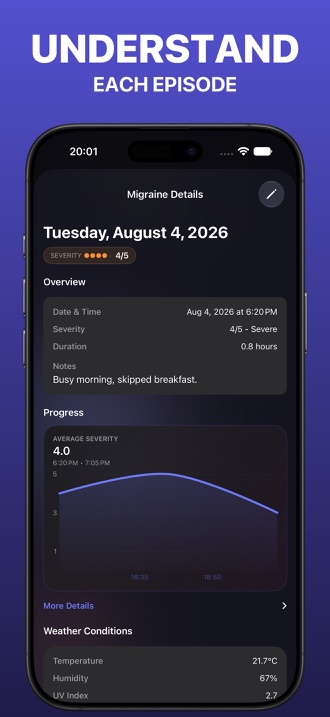
Add medicines and remedies at the start, during, or at the end of a migraine. Use checkpoints to record severity changes and treatment timing throughout the episode, then include the sequence in a history report for your healthcare provider.
Track treatments with AuralogHow to review treatment results
Review several comparable episodes rather than judging a treatment from one event. Ask whether timing, starting severity, sleep, other treatments, or episode duration differed. Look for both improvement and entries that do not fit the pattern.
A useful review might say: “In four entries where I used this treatment within an hour of onset, severity was lower at the next checkpoint in three. In two later-use entries, it was not.” That is an observation to discuss, not a recommendation to change dose or timing.
Bring a short list to your clinician
- Which treatments appear in the log and how often?
- What was the typical timing after symptoms began?
- How did severity, symptoms, and function change?
- Were there side effects, repeat doses, or combinations?
- What specific question should the clinician help answer?
Follow the directions provided by your healthcare professional and the product label. Ask a qualified clinician before starting, stopping, combining, or changing the timing or dose of a medicine. MedlinePlus also advises discussing medicine changes with your provider and keeping an up-to-date medication list.
Sources and further reading
- National Headache Foundation: Tracking Diaries
- Harvard Health Publishing: Keeping a headache diary
- MedlinePlus: Managing your medicines
Sources were checked August 9, 2026. See our editorial policy for how Auralog guides are written and updated.