What is a migraine calendar?
A migraine calendar is a day-by-day view showing when headache or migraine symptoms occurred. The best versions connect each marked day to episode details such as severity, duration, symptoms, treatments, and impact, so you can review frequency without losing context.
The National Headache Foundation identifies frequency, duration, function, symptoms, medication response, and possible triggers as useful tracking information. A calendar emphasizes the first of those—how often attacks occur—while the underlying entries explain what each day was like.
How to count headache days consistently
Choose a simple day rule
Mark a day when headache or migraine symptoms were present, even if they began the previous evening. If one episode crosses midnight, note that it is one continuous episode while still marking the days affected. Tell your clinician how you counted so the summary has context.
Separate days from episodes
One long episode can affect more than one calendar day, and more than one episode can occur in a day. Keep both concepts available: calendar days for frequency and episode records for timing and duration.
Use the same severity scale
Color or shade each day by the highest or most representative severity, but keep the rule consistent. A visual heat map becomes misleading if the meaning of the colors changes month to month.
Distinguish symptom-free days from missing entries
A blank day should mean no attack was recorded, not automatically that you were symptom-free. If you sometimes miss entries, note that before treating blank days as a comparison group.
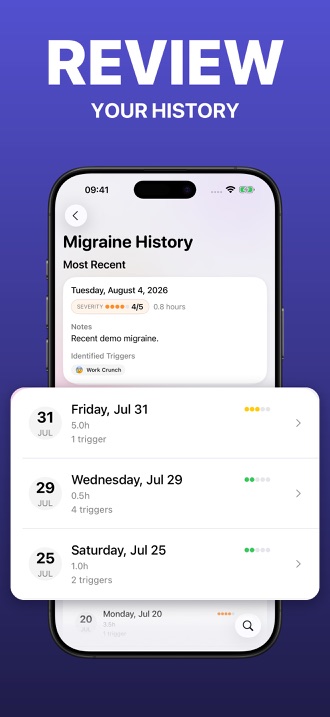
Auralog’s history calendar shows migraine days and severity over time. Open a day to review the episode and keep treatments, checkpoints, possible triggers, and notes connected to the calendar view. Auralog 27 also adds search to Migraine History.
See your history with AuralogWhat to look for on the calendar
- Clusters: several affected days close together.
- Change over time: months that look meaningfully different from your usual pattern.
- Duration: episodes that span multiple days.
- Severity distribution: whether more days are mild, moderate, or severe.
- Treatment periods: what the calendar looked like before and after a clinician-guided change.
- Day-of-week or travel patterns: repeated timing that deserves a closer look in the underlying entries.
Calendar patterns suggest questions; they do not explain why the pattern exists. Open the relevant records before deciding that work, food, weather, sleep, or another factor is responsible.
Use the calendar in a care conversation
Before an appointment, choose a clear review period and summarize headache days, the range of severity, typical duration, and any change that concerns you. Bring the detailed history for treatment timing, symptoms, and response. Ask your healthcare provider which counting method and review period are most useful for your care.
Share your counting rule and any missing entries with your clinician so the calendar is interpreted alongside your symptoms and full history.
Sources and further reading
Sources were checked August 9, 2026. See our editorial policy for how Auralog guides are written and updated.