What should you track?
Record the date and start time, duration, severity, symptoms, impact on normal activities, possible triggers, medicines or remedies, and what happened after treatment. You do not have to capture every field during the attack.
A simple record turns separate, hard-to-remember episodes into a history you can review. The National Headache Foundation recommends starting with a few key details and adding symptoms, treatments, and possible triggers as tracking becomes easier. That approach matters: a record that is simple enough to use is more valuable than a perfect template you avoid.
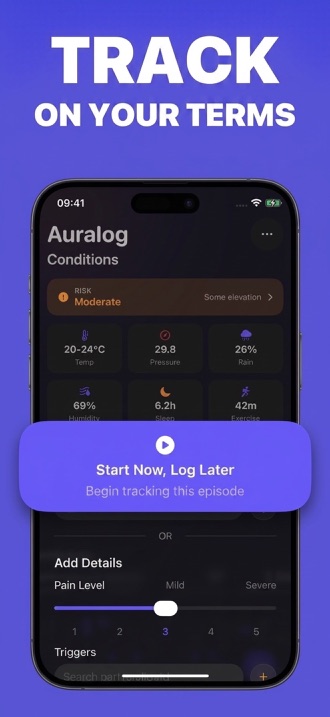
A practical tracking checklist
1. Date, start time, and end time
Capture when you first noticed the episode and when it ended. If you are unsure, an estimate is still useful. Start and end times make it possible to compare duration across your history.
2. Severity and changes over time
Choose one consistent scale and use it the same way each time. A simple mild-to-severe scale can be easier to apply than chasing perfect precision. If the intensity changes, record a checkpoint so you can see when it rose or fell.
3. Symptoms and functional impact
Note symptoms that matter to you, such as nausea or sensitivity to light or sound. Also record whether you could work, drive, exercise, care for family, or continue normal activities. Functional impact can communicate something a pain number alone does not.
4. Possible triggers and context
Record factors you suspect may be relevant—sleep changes, stress, meals, weather, travel, or anything unusual. Use “possible trigger” language. A factor appearing near one attack does not prove it caused the attack; the value comes from reviewing repeated associations over time.
5. Medicines, remedies, and timing
Write down what you took or tried and approximately when. Include prescribed medicines, over-the-counter medicines, and non-medication remedies you want to discuss with your clinician. Do not use the diary itself to change a treatment plan without professional guidance.
6. Treatment response
Record what changed after treatment: severity, symptoms, ability to function, and any side effects you noticed. Treatment timing and response can be especially useful when you and your healthcare provider review what has or has not helped.
7. Notes in your own words
A short sentence can preserve details that fixed fields miss: “Woke after poor sleep, visual symptoms started before pain, took medicine at lunch.” Natural language is often easier to capture than completing a long questionnaire.
Use Save Now, Log Later to capture the start in seconds. Return when you are ready to add severity, symptoms, treatments, remedies, notes, and possible triggers. Auralog can organize possible triggers from typed or dictated language and keep the complete episode together.
Try Auralog on the App StoreHow to keep tracking manageable
- Capture the minimum first. Save the start time and return later.
- Use the same scales. Consistency makes episodes easier to compare.
- Review periodically. Look across weeks or months instead of interpreting one entry in isolation.
- Bring questions, not conclusions. Use patterns to support a conversation with a healthcare professional.
There is no universal rule for how long every person should keep a record. It can be useful before an appointment, while symptoms are changing, or when you and your clinician are evaluating a treatment. Ask your healthcare provider what timeframe would be most useful for your situation.
What your record can and cannot show
Your history can organize what you observed and make changes over time easier to discuss. It cannot determine whether a symptom is safe or replace individual medical care. If you have a sudden severe headache, new neurological symptoms, or symptoms that concern you, seek appropriate medical care rather than waiting to collect more data.
Sources and further reading
Sources were checked August 9, 2026. See our editorial policy for how Auralog guides are written and updated.